



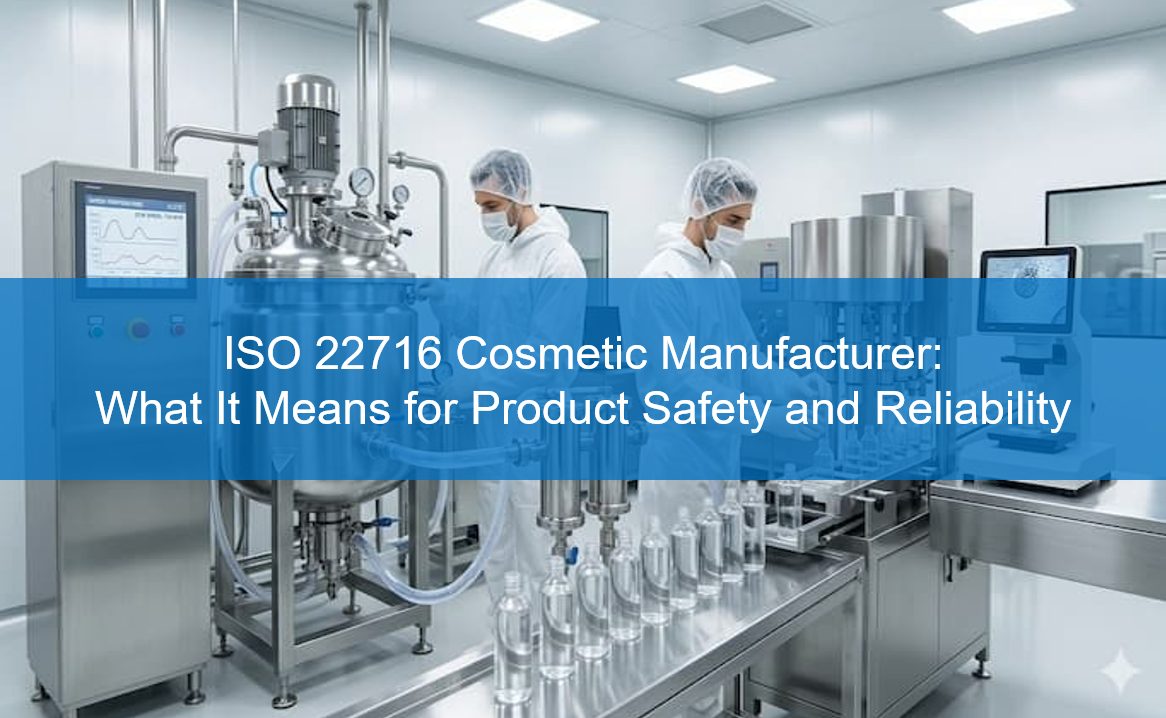
ISO 22716 Cosmetic Manufacturer: What It Means for Product Safety and Reliability
In the beauty and personal care industry, product safety is not a marketing angle. It is a baseline requirement. Consumers expect that every cream, serum, or cleanser they apply has been produced under controlled conditions. For brands, especially those entering international markets, manufacturing standards are no longer optional.
This is where an ISO 22716 cosmetic manufacturer becomes relevant. ISO 22716 provides internationally Recognized guidelines for Good Manufacturing Practices (GMP) in the cosmetics sector. Working with a certified manufacturer signals that structured systems are in place to protect product quality, consistency, and consumer safety.

Contents
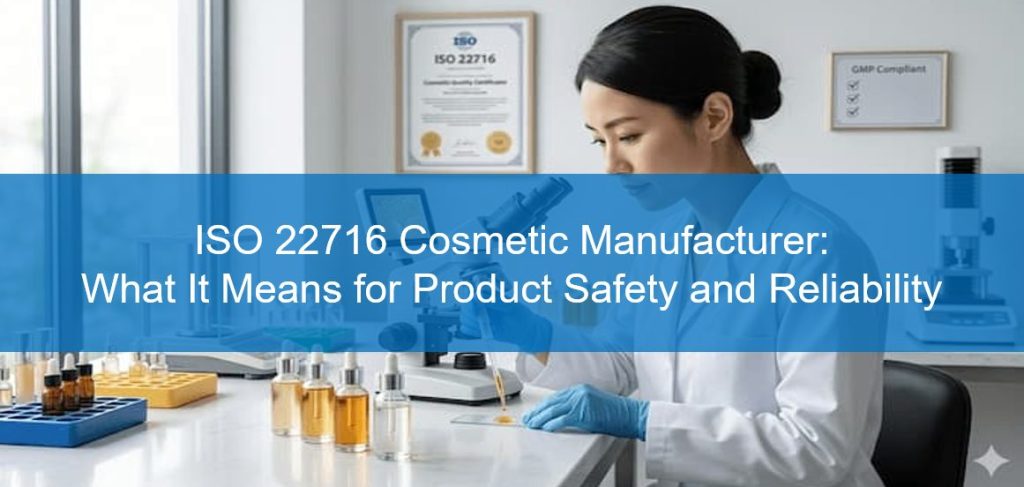
An ISO 22716 cosmetic manufacturer operates according to a globally accepted framework for cosmetic Good Manufacturing Practices. These guidelines cover everything from raw material handling to packaging, storage, and shipment.
Rather than focusing only on the final product, ISO 22716 looks at the entire manufacturing ecosystem. It sets expectations for documentation, hygiene, staff training, equipment maintenance, and quality control. The result is a system designed to Minimize contamination, reduce human error, and ensure batch-to-batch consistency.
For brands, this standard provides assurance that production is not left to informal practices or undocumented procedures. It introduces structure and accountability into every stage of the process.
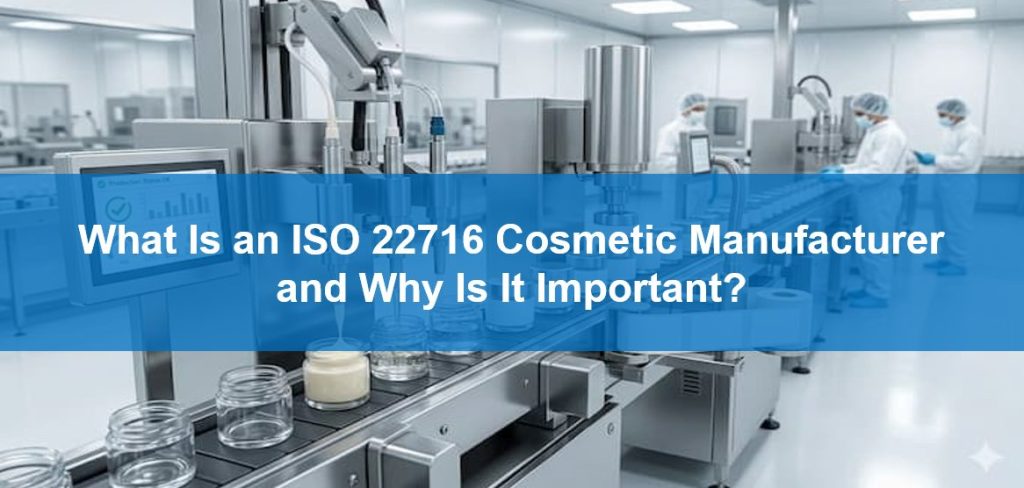
Understanding the role of ISO 22716 begins with understanding what the standard actually covers and why it matters beyond a certification logo on a website.
ISO 22716 is an international standard that outlines Good Manufacturing Practices specifically for cosmetic products. GMP refers to structured guidelines that ensure products are consistently produced and controlled according to quality standards.
Unlike pharmaceutical GMP, which focuses on medicinal products, cosmetic GMP recognises the specific risks associated with skincare, haircare, and personal care products. These risks include microbial contamination, cross-contamination between batches, incorrect Labeling , and formulation inconsistencies.
ISO 22716 addresses these risks by requiring manufacturers to implement documented procedures. This includes clear responsibilities for staff, defined workflows, validated cleaning processes, and traceable records for every production batch.
The goal is simple: prevent problems before they happen rather than reacting after products reach consumers.
ISO 22716 applies to all stages of cosmetic product manufacturing, including:
● Receipt and testing of raw materials
● Bulk production and mixing
● Filling and packaging
● Labeling and storage
● Handling of returns and complaints
It does not dictate specific formulas or ingredient choices. Instead, it focuses on process integrity. For example, it ensures that raw materials are stored under appropriate conditions and that equipment is cleaned properly between batches to prevent contamination.
The standard also emphasises traceability. If a defect is identified, manufacturers must be able to trace affected batches and implement corrective actions quickly. This is essential for recalls or regulatory investigations.
In many regions, compliance with cosmetic GMP is either mandatory or strongly expected. The European Union, for example, recognises ISO 22716 as the harmonised standard for cosmetic GMP under its regulatory framework.
For brands seeking to export internationally, partnering with an ISO 22716 cosmetic manufacturer can simplify regulatory documentation. Authorities often request proof that products are manufactured under GMP conditions.
Beyond regulatory acceptance, distributors and retailers increasingly require evidence of quality systems before listing products. Certification provides a structured way to demonstrate that manufacturing processes meet international benchmarks.

Certification alone does not guarantee quality. What matters is how the standard is implemented in daily operations. A compliant manufacturer integrates GMP into documentation, facility design, staff training, and ongoing monitoring.
One of the core principles of ISO 22716 is documentation. Every critical process must be defined, recorded, and controlled.
This includes:
● Standard Operating Procedures for each production step
● Batch manufacturing records
● Equipment cleaning logs
● Raw material specifications and testing records
Documentation ensures reproducibility. If a serum is produced today and again six months later, the same documented process is followed. Deviations are recorded and investigated.
Process control systems also help reduce human error. Clear instructions and defined checkpoints prevent informal shortcuts. For brand owners, this translates into greater confidence in product consistency.
Cosmetic products are particularly vulnerable to microbial contamination. ISO 22716 therefore places strong emphasis on hygiene.
Manufacturers must maintain clean production areas, implement appropriate air filtration where necessary, and define sanitation schedules. Staff are trained in hygiene protocols, including proper gowning and handwashing procedures.
Training is not a one-time event. Ongoing education ensures that employees understand not just how to perform tasks, but why certain procedures exist.
Facility management also plays a role. Layout design must Minimize cross-contamination risks. Raw materials and finished goods are stored separately, and access to sensitive areas is controlled.
ISO 22716 encourages a risk-based approach. Instead of reacting to failures, manufacturers are expected to identify potential risks in advance and implement preventive measures.
For example, if a preservative system is known to be sensitive to temperature fluctuations, storage conditions are closely monitored.
Continuous improvement is another key principle. Internal audits, corrective action plans, and management reviews help ensure that systems evolve as operations scale.
This structured approach strengthens long-term reliability rather than relying on informal quality checks.
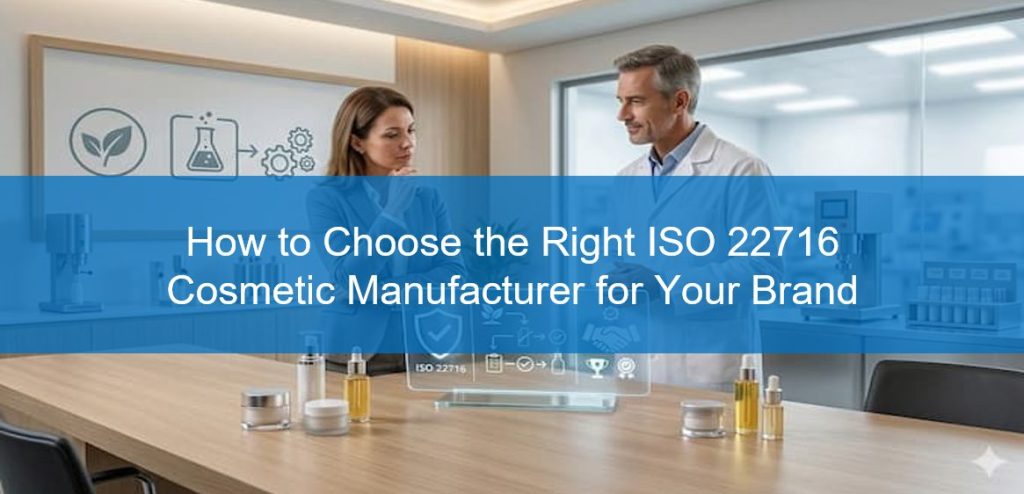
Not all certified manufacturers are equally suitable for every brand. Beyond certification, several practical considerations determine whether a partnership will succeed.
First, verify the manufacturer’s certification status. Certification should be issued by a Recognized body and remain valid. Ask for documentation rather than relying on marketing claims.
It is also useful to understand their audit history. How often are they audited? How do they address non-conformities? A transparent manufacturer should be comfortable discussing corrective actions taken in the past.
Audit readiness reflects how deeply GMP principles are embedded in daily operations.
Certification does not automatically mean technical competence. Evaluate whether the manufacturer has experience producing products similar to yours.
Consider:
● Equipment suitability for your formulation type
● Minimum order quantities
● In-house testing capabilities
● Stability testing support
● Experience with specific packaging formats
Review their quality track record. Have they handled product recalls? How were issues managed? A strong manufacturer will have documented processes for complaint handling and recall management.
Manufacturing is a long-term relationship. Clear communication reduces misunderstandings in formulation adjustments, packaging updates, or production scheduling.
A reliable ISO 22716 cosmetic manufacturer should provide transparency in documentation, allow audits when appropriate, and maintain open channels for quality discussions.
For growing brands, scalability is also important. Ensure the manufacturer can support future volume increases without compromising standards.
Many emerging brands encounter similar questions when exploring GMP-certified manufacturing.
ISO 22716 itself is a voluntary international standard. However, many regulatory frameworks either require or strongly reference GMP compliance. In certain markets, demonstrating adherence to ISO 22716 significantly facilitates regulatory approval and distributor acceptance.
ISO 22716 is an international cosmetic GMP standard. In contrast, FDA GMP guidelines in the United States apply to cosmetics under a different regulatory structure. While both aim to ensure product safety and quality, documentation formats and enforcement mechanisms differ. Companies exporting to multiple regions often align with ISO 22716 because of its international recognition.
Certification typically remains valid for a defined cycle, often three years, subject to regular surveillance audits. Continued compliance is required to maintain certification status.
Yes. Many ISO 22716 cosmetic manufacturers work with startups and emerging brands. While minimum order quantities may apply, small brands benefit from the structured systems and regulatory credibility that certified facilities provide.

An ISO 22716 cosmetic manufacturer operates within a structured framework designed to safeguard product quality and consumer safety. The standard addresses documentation, hygiene, risk management, and traceability, creating a controlled manufacturing environment.
For brands, certification provides more than a compliance checkbox. It supports global market access, strengthens retailer confidence, and reduces operational risk.
Choosing the right partner requires more than verifying a certificate. It involves evaluating capabilities, transparency, and long-term alignment. In a competitive beauty market where trust influences purchasing decisions, manufacturing standards form the foundation of reliability.



For further information, please contact us.